I grew up surrounded by people who breathed pure creativity. If you cut them, they bled art, not blood. They could make anything from nothing. A sketch, a painting, a melody, a handmade gift… and it all looked frustratingly effortless.
Meanwhile, I struggled to remember how many petals a flower had when I looked at a blank page. Five? One? None? What shape were the petals? How will I know if they’re right? What color?!
I’d sit there frozen, trying to decide where the first line even belonged.
Yet when I finally relaxed enough to make something in a way that felt natural to me, I was told I was doing it wrong.
“Don’t do it that way.”
“That’s not how you’re supposed to draw that.”
“You need to learn the right way.”
None of those “lessons” stuck. None of it felt like mine. It felt like I was trying to play someone else’s instrument without ever being shown how to hold it.
So I grew up believing I wasn’t an artist.
Not really. Not compared to them.
For decades, I carried that belief like a stone in my pocket.
Whenever someone asked if I was any type of creative, I’d dodge the question or shrink back. Even when I started making things that felt familiar, like photography or little sketches, experimenting with digital pieces, or my writing and drawing in journals — it never felt like enough to claim a title I thought belonged to other people.
Real artists.
People who could make something from thin air.
My way of making always felt… tainted. Second rate. Like I was cheating?
Because I used references. Because I needed examples. I copied angles and lighting because I didn’t know how to invent them. I traced important lines. I borrowed styles. I leaned on inspiration.
I thought that meant I wasn’t the “real thing.”
Then, years later, I found a truth that changed everything:
Everyone uses references.
Da Vinci traced.
The masters often copied each other.
Artists use reference books, models, grids, projectors, studies and drafts.
There are entire professions where copying is not only allowed but required, like restoration and conservation.
There are whole movements made of abstraction, distortion, reinterpretation.
There are collaborative studios where ten people touch the same piece.
I realized the real difference between me and the artists I admired wasn’t just talent — it was permission.
Permission to start. Permission to learn.
Permission to make something badly.
Permission to make something your way.
It took actual decades before I felt comfortable using the word “artist”.
Even longer before I allowed myself to say “I’m a maker,” without flinching.
But the truth is this: I love making things. Whether it’s food or art, photos, journals, letters, paper or any other craft… I love it!
If it can be made by hand, I want to shape it. If it can’t be made by hand, I’m going to try anyway, damn it.
This is my rebellion — I’m against the idea that creativity has rules or gatekeepers. There isn’t one “right” way.
Most of my first attempts at being an artist were terrible. By my own measure. But then one day, someone else saw some of my “art” and wanted it. That was the moment it all cracked open and I remembered an important fact: not all art is for everyone — but everyone has art meant for them.
That’s the true beauty of artistry: it finds the people who need it and doesn’t bend itself into a different shape for those who don’t. Walk through any museum and you’ll feel how not every room is meant for you. Some pieces grab you, some don’t, even if they’re made by the masters. Your art is the same way, you just need to find the room where it resonates.
Someone, somewhere, will love the thing you make — even if you don’t feel worthy of it yet.
So here is the invitation to my quiet rebellion:
Make your art your way.
You can use references. Use tutorials or don’t! Copy something just to learn how it works and then do it the “wrong” way to see if your hand prefers it. Use someone else’s method until it slowly becomes uniquely yours.
Your hands will tell you what feels right.
Your eyes will tell you when something clicks.
Your heart will tell you when it’s yours.
You don’t need someone else to knight you into being an artist and you don’t need permission from the people who came before you. You just have to make something.
And if you’ve been waiting for someone to tell you that you’re allowed to do it the “wrong” way, here it is: you are.
This could be your quiet rebellion too.
If You’re Still Reading…
Before I ever felt comfortable calling myself an artist, I gave myself four phrases to work from:
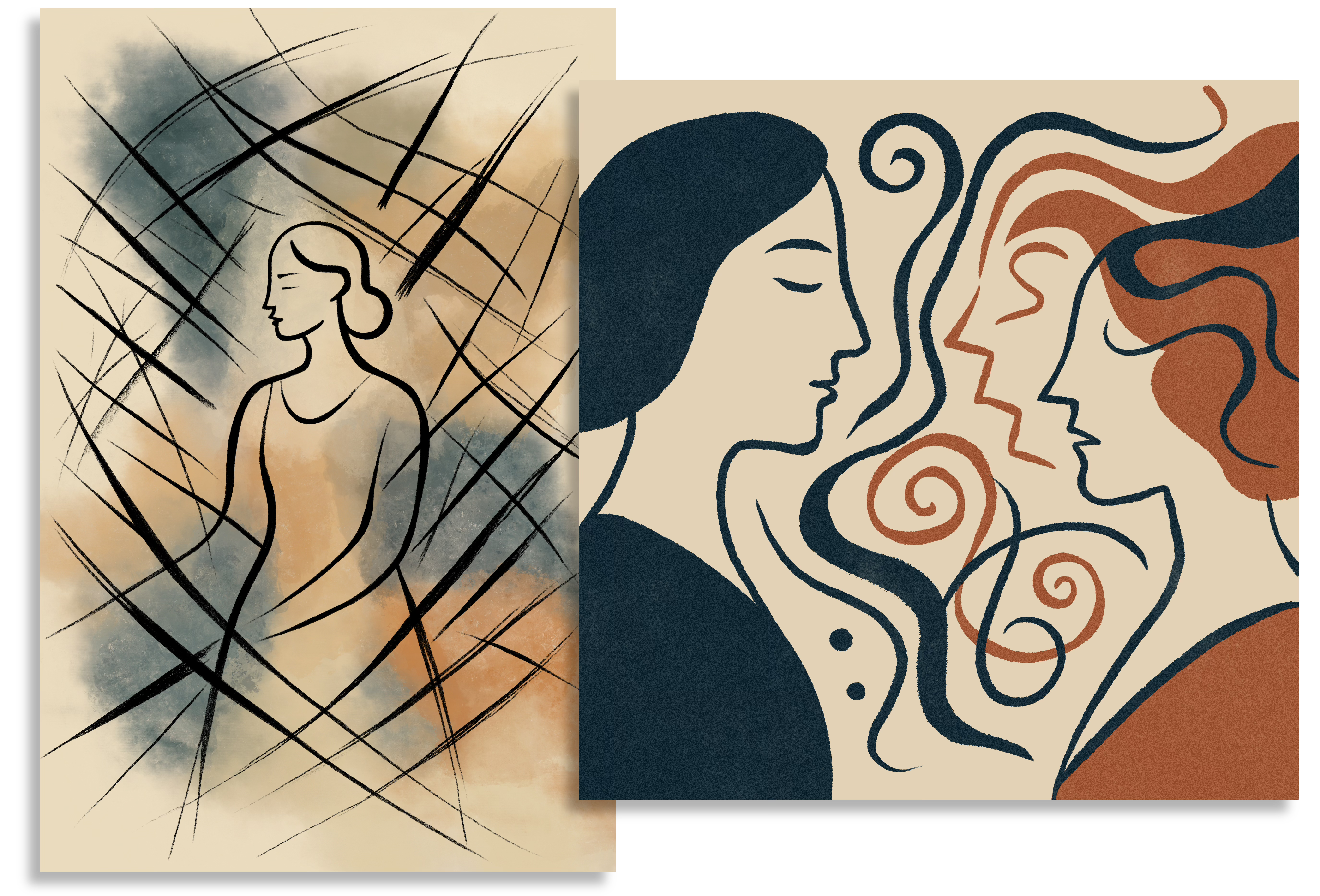
“artist” under attack
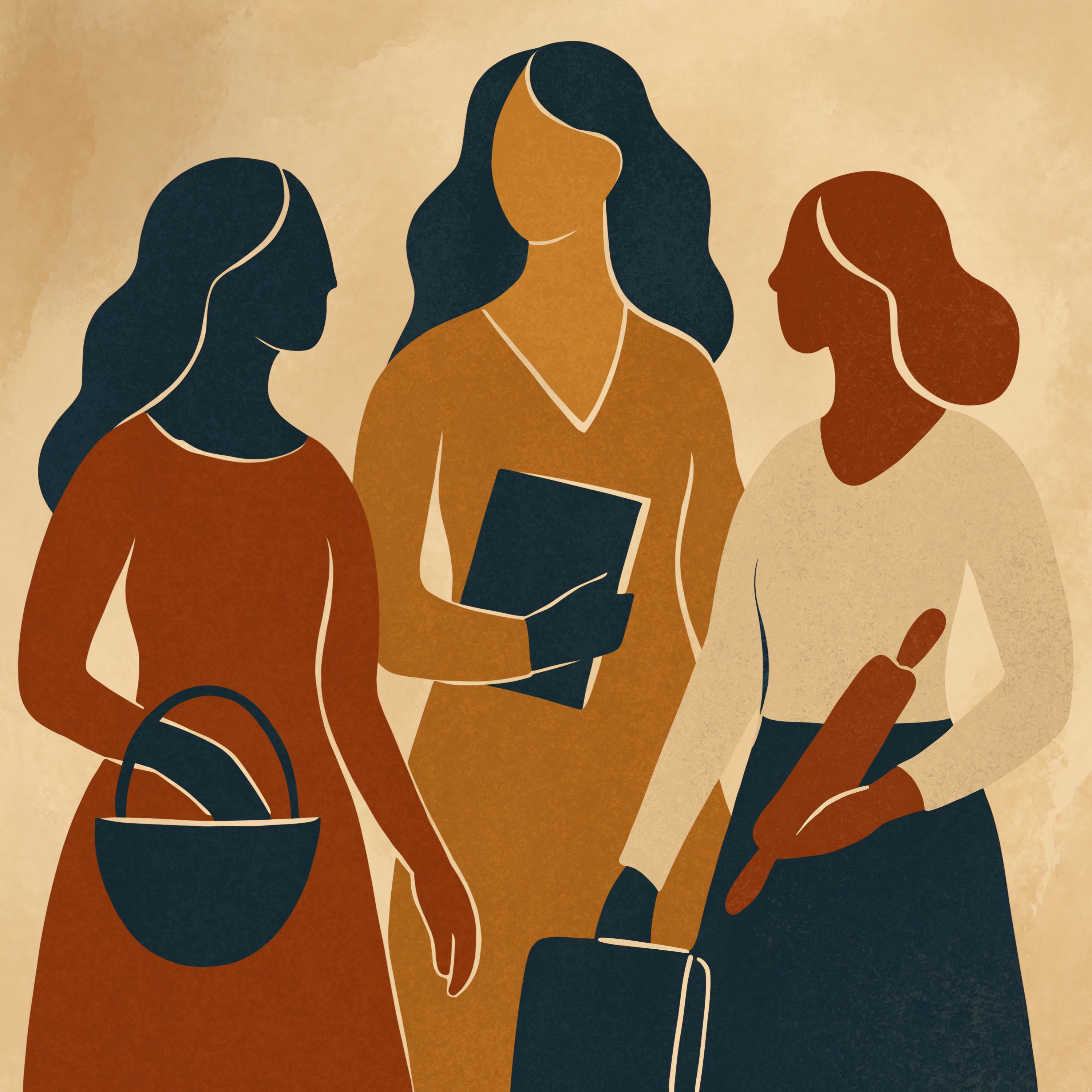
you can be
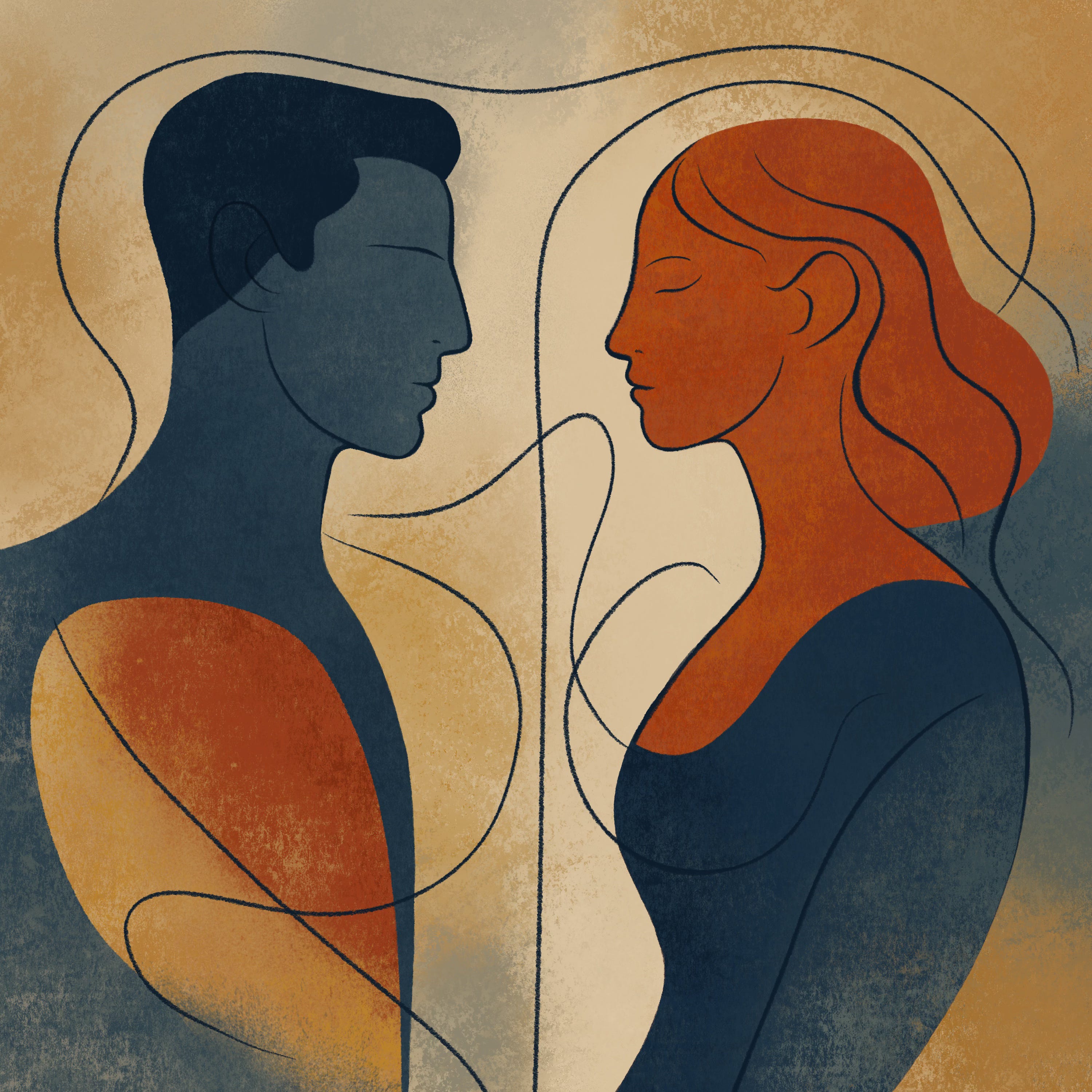
be uniquely you
peace in abstraction
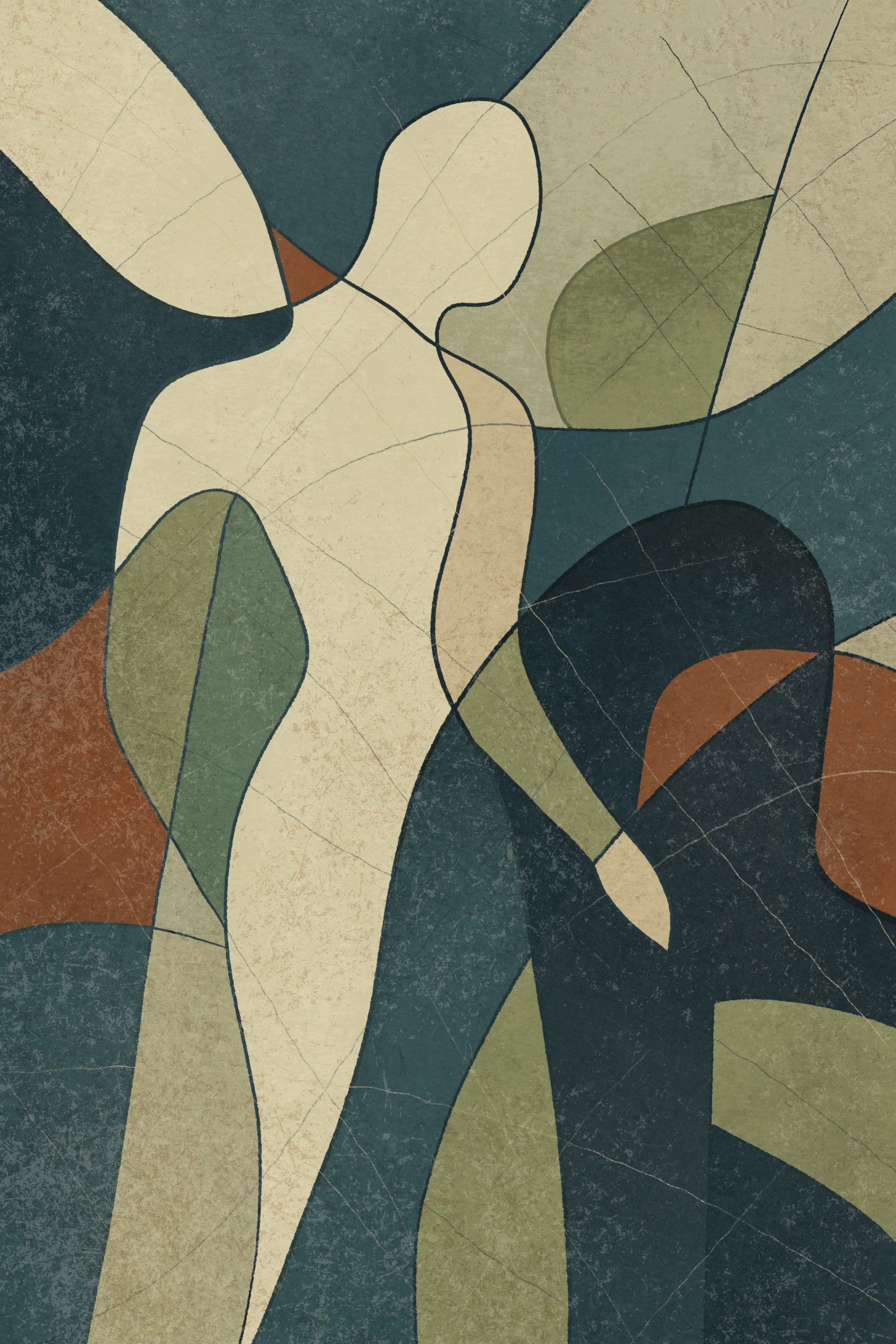
They became the titles of the pieces I shared through this post. They were my verbal anchors I used while I experimented, failed, tried again and eventually let go and let it be. In truth, they were a kind of self-prescribed art therapy, a way to explore until something finally felt like mine.
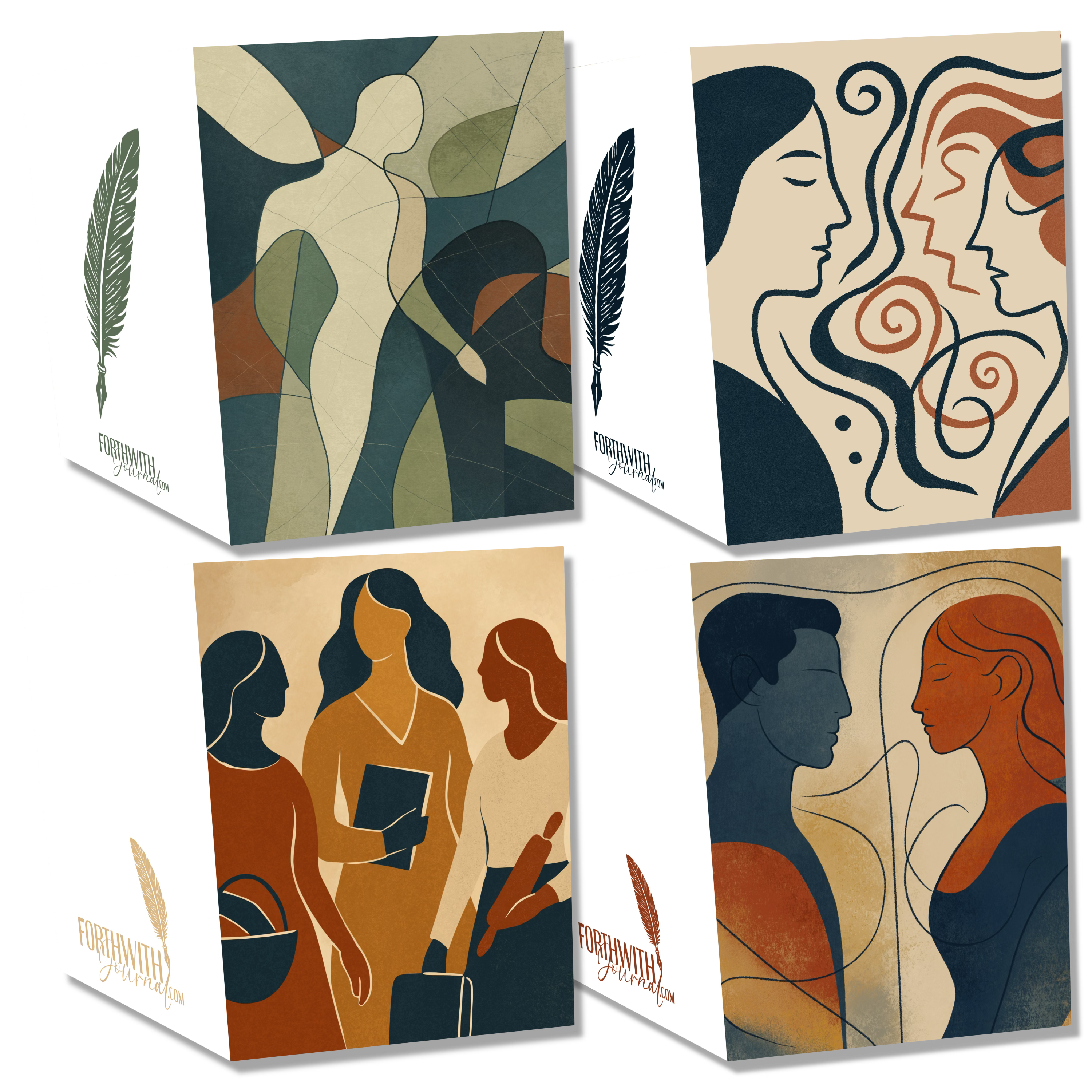
This week’s gift is a set of printable greeting cards featuring these pieces. Use them or mail them, tuck them into a journal, make a collage with them or use this format to create your own. They’re not here to show you the “right” way to use your art. They’re meant as a reminder that handmade things matter and an invite to make your own version, because your art deserves a place in the world too.
You may have to argue with your printer to get them lined up correctly, but once you win that battle, all that’s left is to cut a straight edge, fold the card and use it however you like.